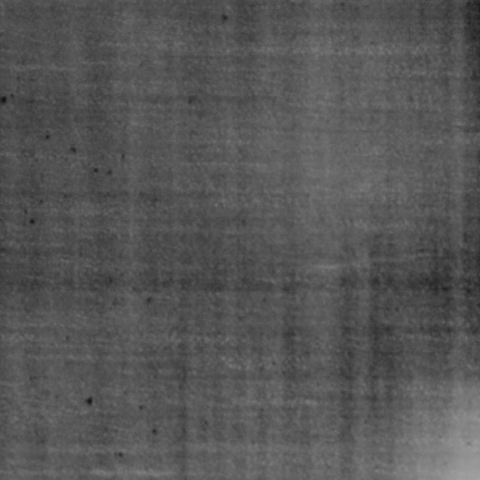
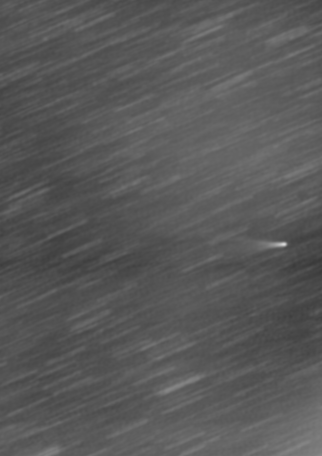
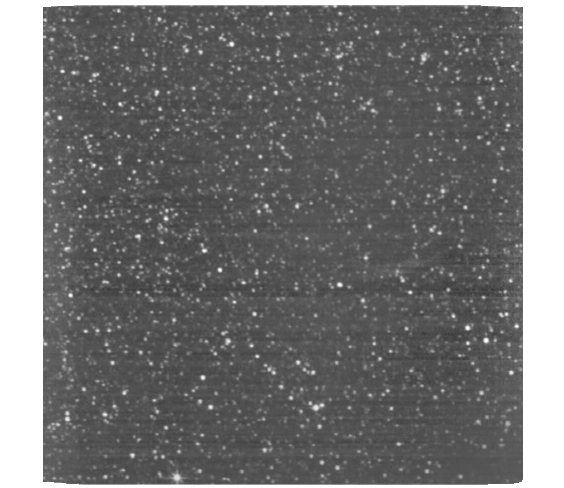
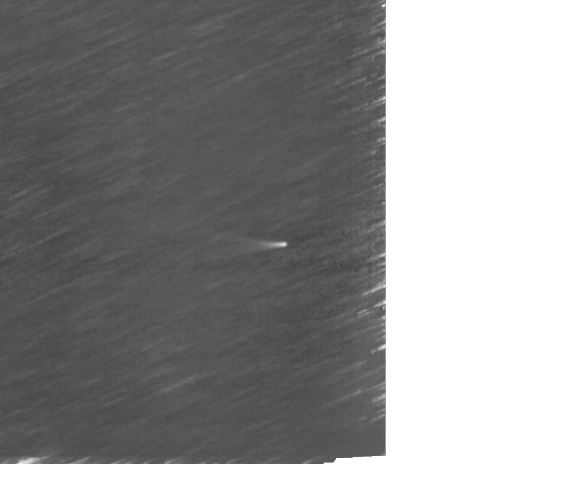
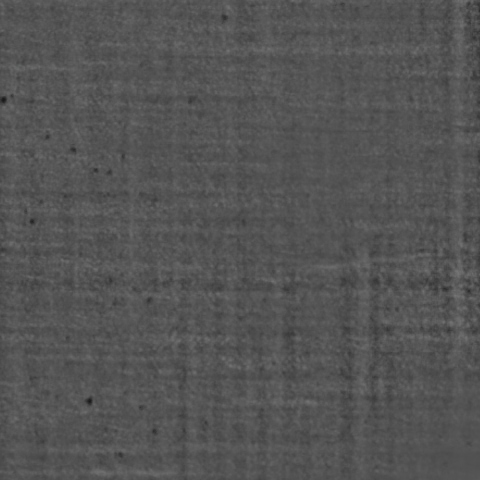
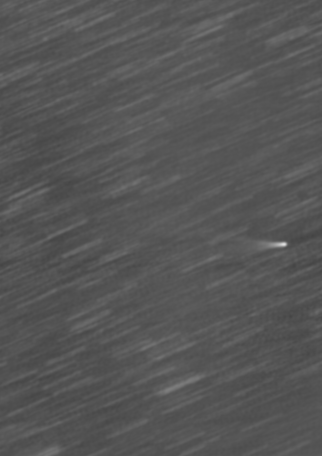
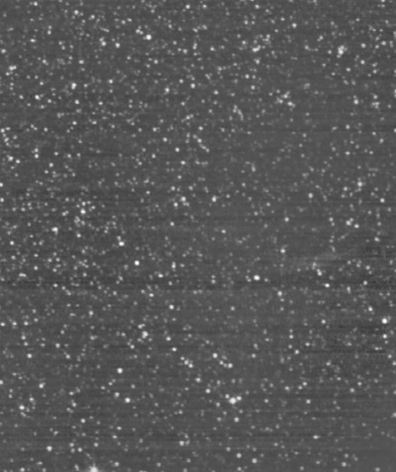
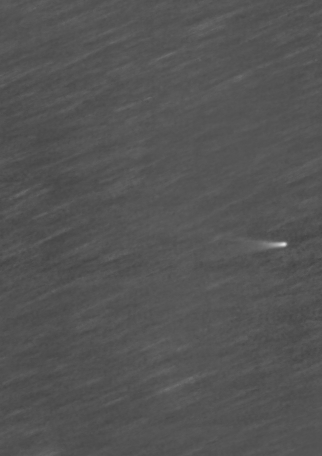
Original
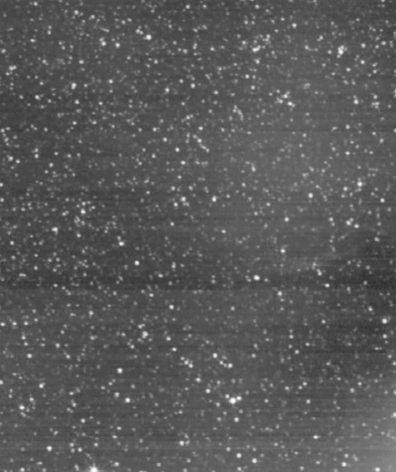
Original frames with attribution.
Download MP4
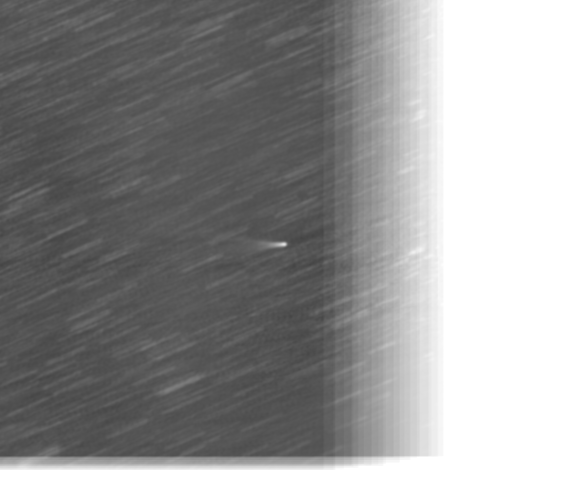
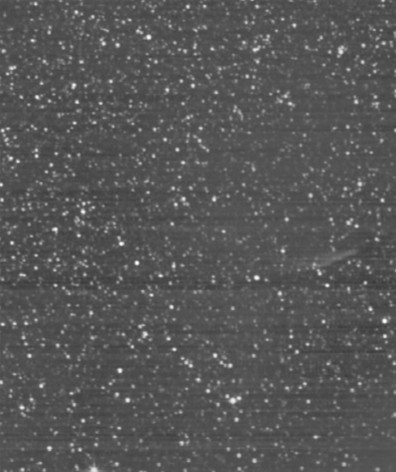
Astronomical video registration
Star-field and moving-object alignment without shrinking the recorded field.
Complete example evaluation
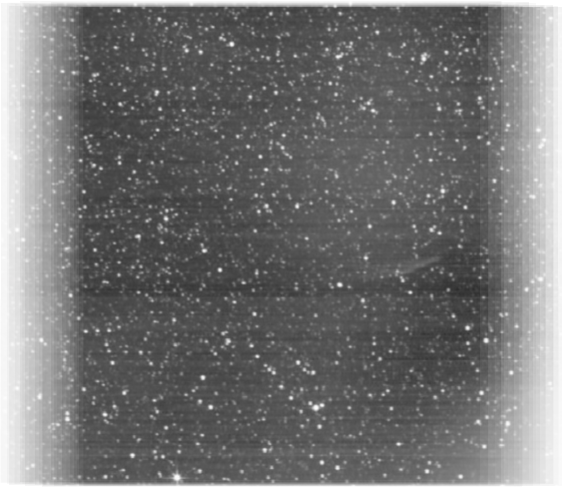
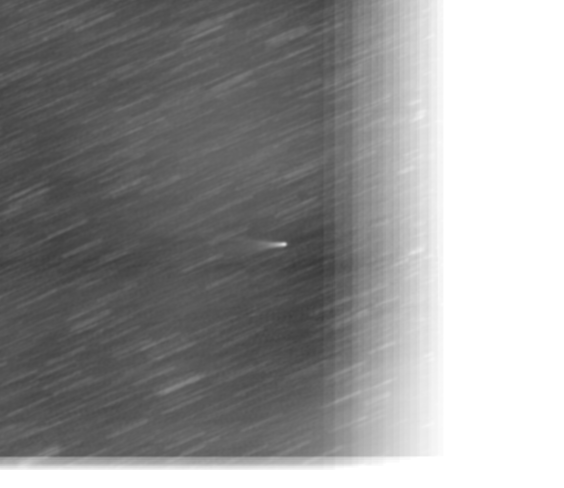
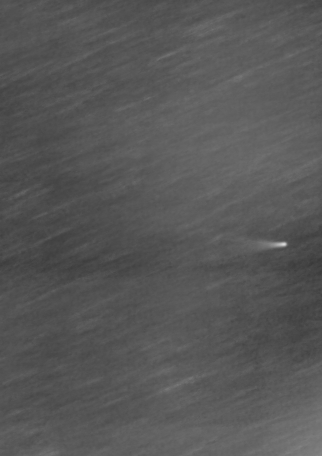
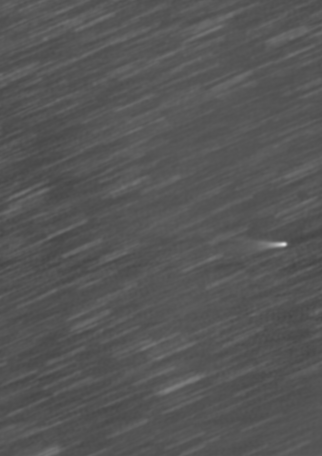
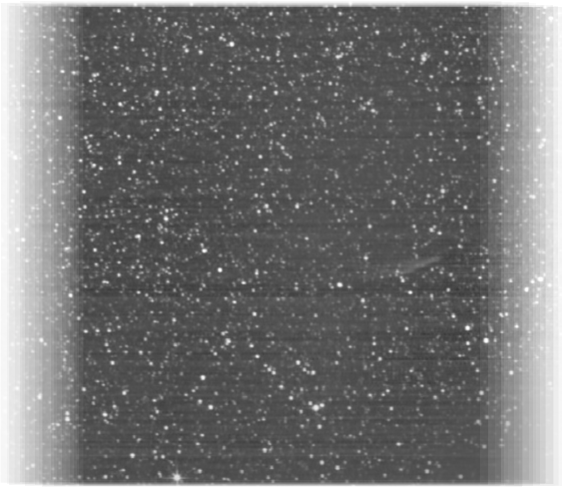
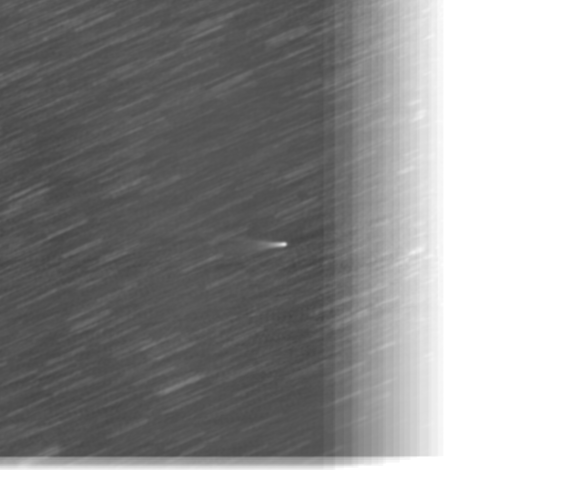
The example video is included locally and every output below is derived from all 57 frames. Median stellar registration residual: 0.512 px. Detected object velocity: +0.696, -0.304 px/frame. Persistent sensor defects: 9 hot and 132 dark pixels. The second pass selected a Gaussian sigma of 18 px from five tested candidates.
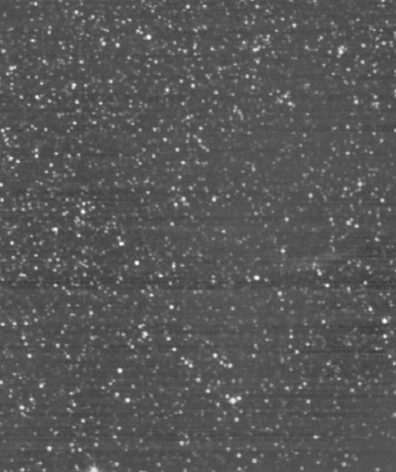
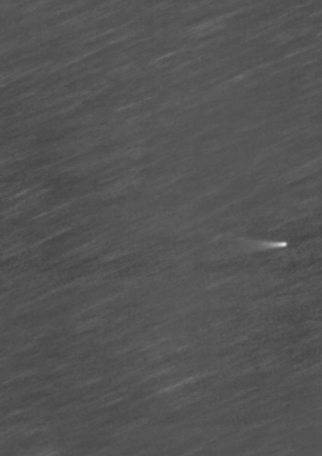
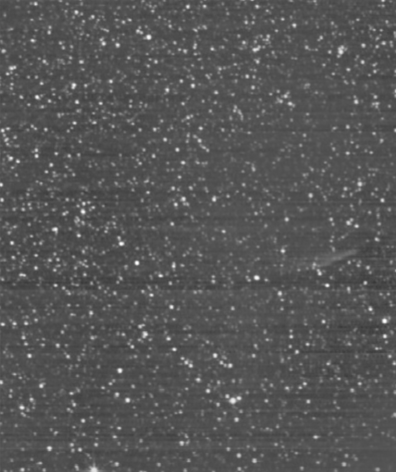
All preview boxes have the same size. Source pixels retain one common display scale, so smaller common-area videos remain smaller inside their boxes rather than being enlarged.
Geometric alignment of the source video without sensor correction.
Original frames with attribution.
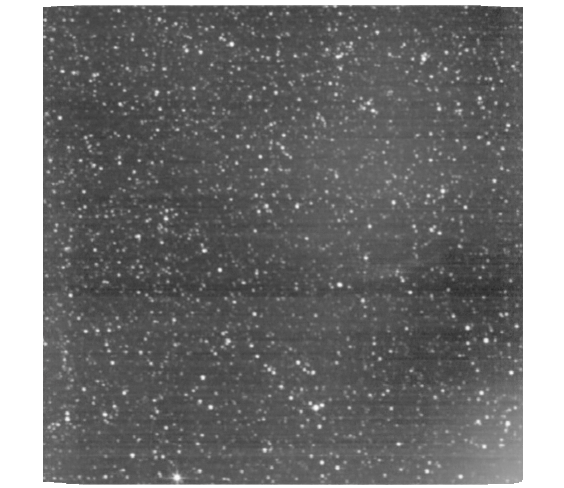
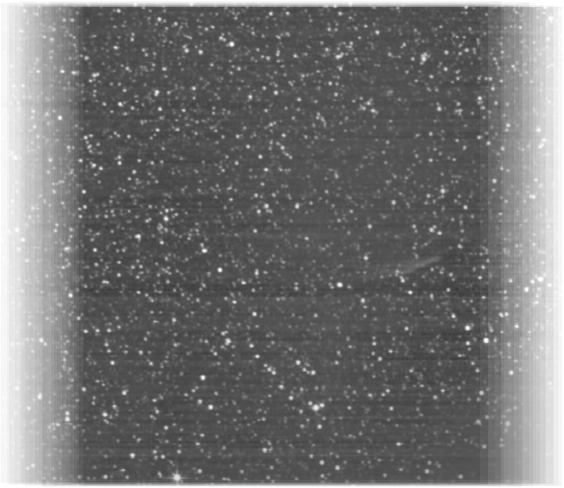
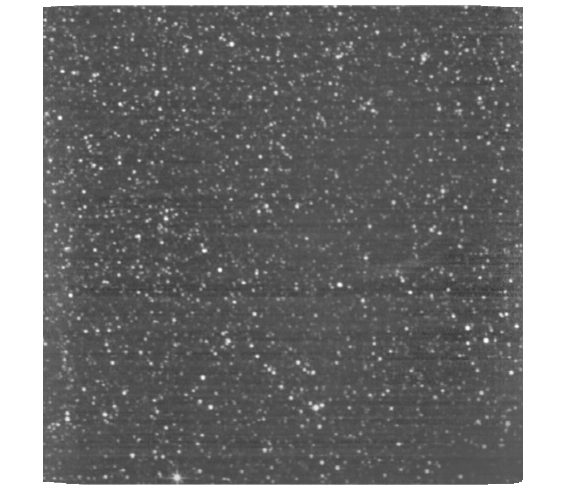
Download MP4Registered stars on the complete expanded canvas.
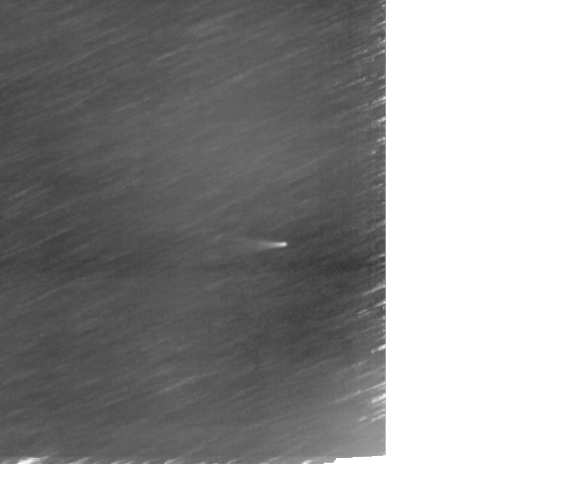
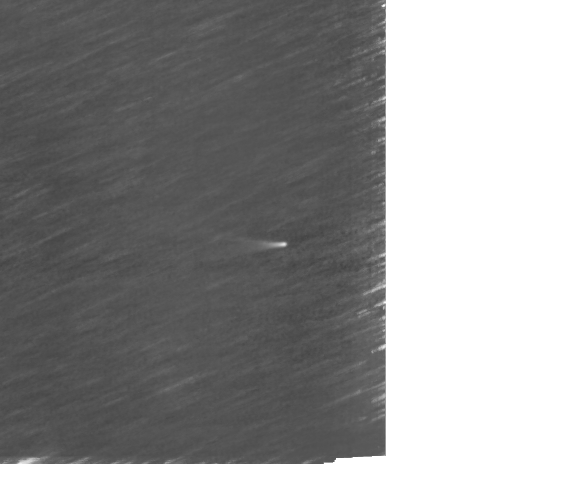
Download MP4Moving object centred on the expanded canvas.
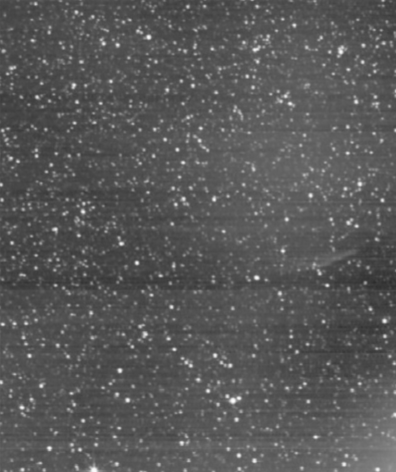
Download MP4Star alignment restricted to shared coverage.
Download MP4Object alignment restricted to shared coverage.
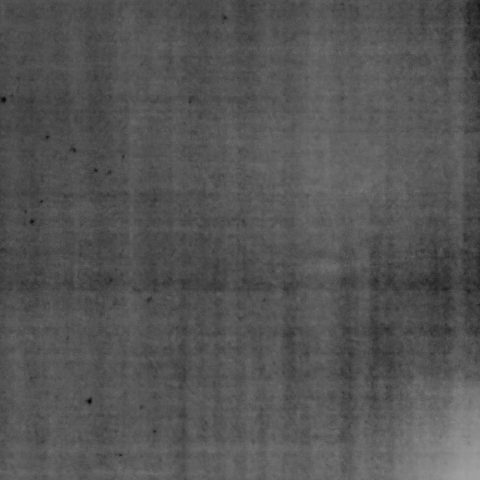
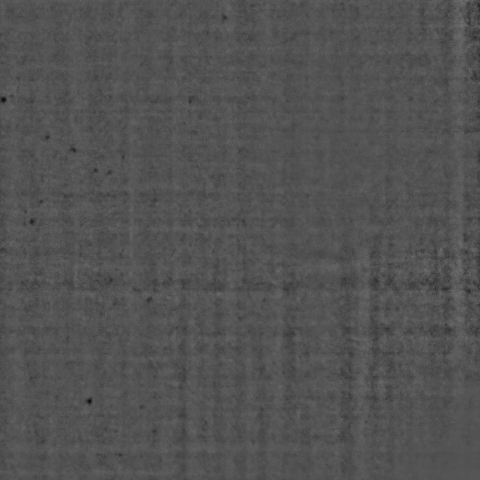
Download MP4Persistent hot and dark pixels are repaired before applying the first multiplicative pseudoflat.
Bad pixels repaired and the temporal-median pseudoflat applied.
Download MP4Pseudoflat source registered to the stars.
Download MP4Pseudoflat source centred on the moving object.
Download MP4Pseudoflat star alignment with shared coverage only.
Download MP4Pseudoflat object alignment with shared coverage only.
Download MP4A second, broader Gaussian illumination mask reduces residual large-scale unevenness.
Pseudoflat result after the selected broad Gaussian residual mask.
Download MP4Gaussian-mask source registered to the stars.
Download MP4Gaussian-mask source centred on the moving object.
Download MP4Gaussian-mask star alignment with shared coverage only.
Download MP4Gaussian-mask object alignment with shared coverage only.
Download MP4Each image uses every frame of its named video sequence. FITS stores three RGB planes and an NFRAMES header. The products follow the same original, star-reference and object-reference layout as the videos.